A pilgrimage to Rome centers on the four major basilicas: St. Peter's, Saint John Lateran, Saint Mary Major, and Saint Paul Outside the Walls. They can be visited in two to three days at a reasonable pace. Depending on time and devotion, you can add the catacombs on the Via Appia, the minor basilicas, and shrines linked to the martyrs. What sets a pilgrimage apart from a tourist trip is not the list of places, it's the pace and the intention. Two people can visit the exact same itinerary and have entirely different journeys, one a pilgrimage, the other cultural tourism.
In this article you will learn how to structure a Roman pilgrimage, what the four basilicas mean, and what a traveler from Quebec should prepare for.
The four major basilicas
These are the four churches that hold the rank of papal basilica. They have formed the heart of the Roman pilgrimage for centuries.
| Basilica | What defines it | What to plan for |
|---|---|---|
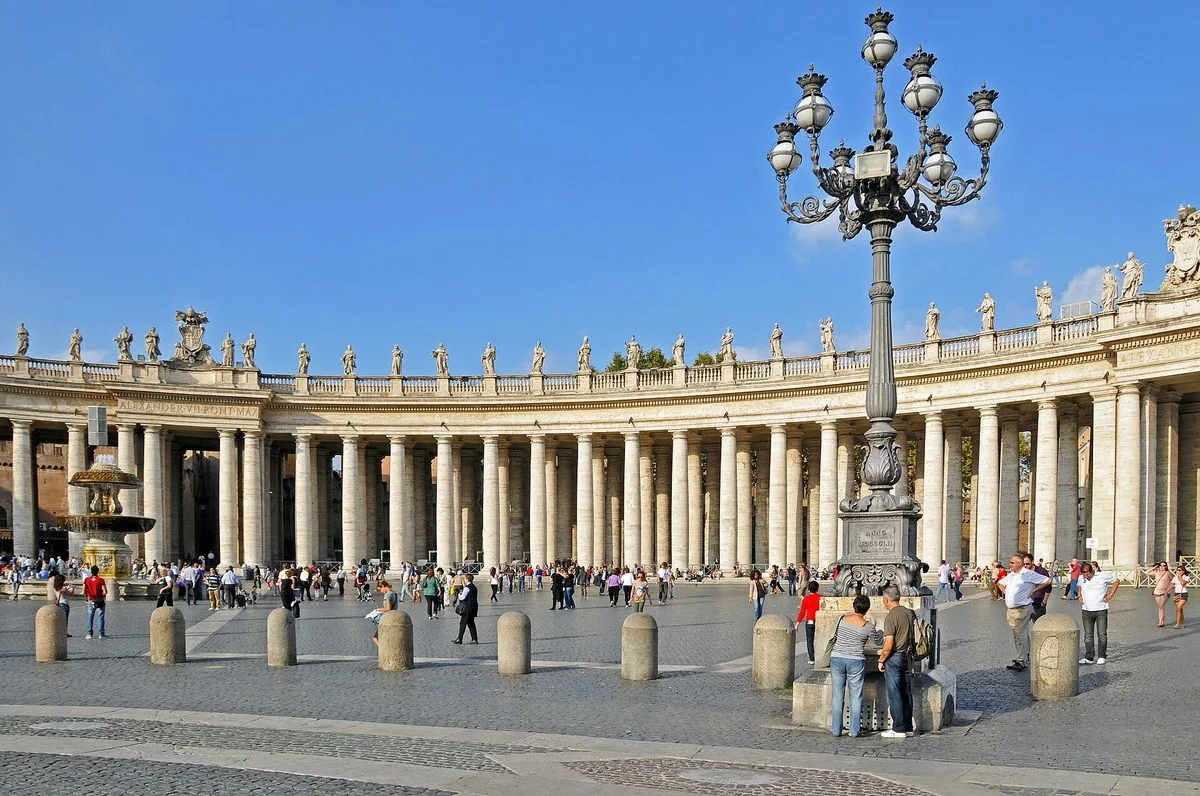
| St. Peter's, Vatican | Built over the tomb attributed to St. Peter. The largest church in the world | Free entry, security-check line |
| Saint John Lateran | Rome's cathedral, the pope's seat as bishop of the city | Often wrongly overlooked, quieter |
| Saint Mary Major | Rome's largest church dedicated to the Virgin. 5th-century mosaics | Near Termini station |
| Saint Paul Outside the Walls | Built over the tomb attributed to St. Paul. Frieze of portraits of every pope | Off the beaten path, metro line B |
A point most visitors don't know: Rome's cathedral is not St. Peter's, it's Saint John Lateran. St. Peter's is a papal basilica, but the pope's episcopal seat is at the Lateran. Many pilgrims spend three days in Rome without ever setting foot in its own cathedral, which is a strange oversight.
For that reason, the Lateran is also noticeably quieter than St. Peter's. For anyone seeking a place of prayer rather than a crowd, that's a considerable difference.
A three-day itinerary
Day 1, the Vatican. St. Peter's, the dome if you have the energy, the grottoes. A full day if you add the museums. Practical details are covered in visiting the Vatican and St. Peter's Basilica.
Day 2, the Lateran and Saint Mary Major. The two basilicas are relatively close together. Add, if time permits, the Holy Stairs, the Scala Santa, located across from the Lateran, which pilgrims climb on their knees.
Day 3, Saint Paul Outside the Walls and the catacombs. Saint Paul's is off the beaten path, allow for the travel time. The catacombs, on the Via Appia, are visited in the afternoon.
This pace leaves dead time in every day. That is intentional. A compressed pilgrimage is no longer a pilgrimage.
The catacombs
Several networks can be visited, including those of San Callisto, San Sebastiano, and Santa Domitilla, on or near the Via Appia Antica.
Visits must be done in a group with a guide. It's cool underground, even in summer, and the light is dim. These are not spectacular sites in the tourist sense, and that is exactly what makes them powerful.
The Via Appia itself is worth walking. It's one of the oldest Roman roads, and the original paving is still visible in places.
What sets a pilgrimage apart from a trip
The question comes up often, and it deserves a frank answer.
A pilgrimage is not defined by the number of churches visited. Two people can follow the exact same itinerary, one on pilgrimage, the other doing cultural tourism.
What actually changes:
- The pace. A pilgrim sits down. Stays. Doesn't check boxes.
- The preparation. Reading up on the places, their history, the saints they're tied to, transforms the visit.
- The participation. Attending a Mass in the basilicas, rather than walking through them outside of services.
- The silence. The hardest thing to find in a saturated Rome, and the most precious.
Many travelers set out with the idea of a pilgrimage and come back with photos. The deciding factor is the number of places on the program. The fewer there are, the better the chance the trip becomes what you hoped for.
Tickets and papal celebrations
The Wednesday general audience. It's held on St. Peter's Square or in the Paul VI Audience Hall, barring the pope's absence. Tickets are free and are requested through the Prefecture of the Papal Household.
One point worth flagging. Free is the rule. Any paid offer to "guarantee a spot" at the audience is a support service, not a right of access being sold.
The Sunday Angelus. The pope recites it at noon, on St. Peter's Square. Access is free, after a security check.
Papal Masses. Some require a free ticket requested in advance.
The official calendar of celebrations is available on the Holy See's website.
The Holy Door and jubilee years
The Holy Door opens only during Holy Years, or jubilees. Passing through it is an act of penance and grants a plenary indulgence, under conditions set by the Church.
Outside jubilee years, the Holy Doors of the major basilicas remain sealed. Check the jubilee calendar with official sources before planning a trip around this specific goal.
What a pilgrim from Quebec should prepare for
Jet lag. Six hours ahead. The first two days are unproductive. Don't schedule the most demanding day for right after you arrive.
Travel insurance. RAMQ covers only a small share of medical costs abroad. Insurance covering hospital care and repatriation is essential, especially for a trip involving a lot of walking and, sometimes, an older group.
Flights. Direct Montreal-Rome connections may exist in season. A direct flight easily saves half a day both ways.
Walking. A Roman pilgrimage means kilometers every day, often on uneven cobblestones. Good shoes matter more than almost anything else in your suitcase.
Dress code. Shoulders and knees covered in every place of worship. Enforcement is real, denial of entry is possible. A light scarf handles the shoulders.
Going alone or with an organized group
Both formats have their own logic.
In a group. Structured spiritual guidance, organized Masses in the basilicas, logistics taken care of. Suited to people seeking a communal dimension, or traveling with older relatives.
On your own. An entirely free pace, with the freedom to stay in a church for two hours if the urge strikes. Requires more preparation, particularly for bookings.
There's no universally right answer. The honest question to ask is whether you're looking for a communal experience or time alone.
Conclusion
A pilgrimage to Rome isn't measured by how many basilicas you check off. The four major ones are more than enough to fill three days, and the Lateran, often overlooked, is the one that offers the most silence.
The recurring mistake is overloading the program, which turns the pilgrimage into a race. Cut one destination from your list, you won't regret it.
To expand the trip beyond Rome, see travel to Catholic Italy. For a day-by-day outline, the 3-day Rome itinerary.
For support in preparing a pilgrimage, get in touch.
Frequently asked questions
- What are the four major basilicas of Rome?
- St. Peter's in the Vatican, Saint John Lateran, Saint Mary Major, and Saint Paul Outside the Walls. These are the four papal basilicas, the heart of the Roman pilgrimage for centuries. Saint John Lateran is Rome's cathedral, contrary to a common belief that assigns that role to St. Peter's.
- How many days does a pilgrimage to Rome take?
- Three days allow you to cover the four major basilicas at a reasonable pace, plus the catacombs. Two days forces you to compress the schedule. A week lets you add the minor basilicas, shrines, and above all time for reflection, which is what sets a pilgrimage apart from a tourist circuit.
- Are tickets for the papal audience paid?
- No, they are free and are requested through the Prefecture of the Papal Household. Any paid offer claiming to guarantee a spot is selling a support service, not a right of access. The general audience is held on Wednesdays, on St. Peter's Square or in the Paul VI Audience Hall, barring the pope's absence.
- Can you pass through the Holy Door at any time?
- No. The Holy Doors of the major basilicas open only during Holy Years, or jubilees. Outside those periods, they remain sealed. Passing through the Holy Door is an act of penance that grants a plenary indulgence, under conditions set by the Church.